

In clothing stores, the question "what size should I buy?" arrives on WhatsApp every day, and a wrong answer can lead to an exchange. Sizing issues accounted for 55% of Brazilian ecommerce exchanges and returns in the first half of 2026, according to the "Da Compra à Confiança" report by Confi with Neotrust and AfterSale, reported by E-Commerce Brasil. The same study says a return can consume up to 65% of the product's value.
AI can help a clothing customer choose a size by locating the product's chart, requesting the appropriate measurement, and explaining what the comparison can establish. The store must say whether the chart contains body or garment measurements. Mixing the two can lead to a wrong recommendation even when every number is correct.
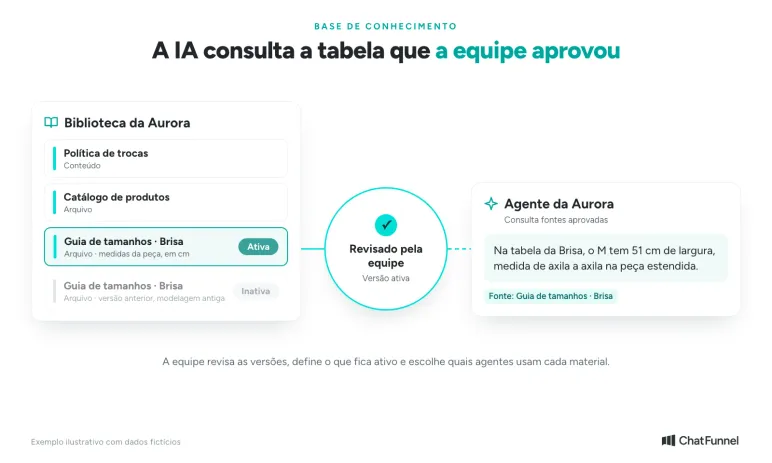
In the ChatFunnel knowledge base, the team can create content and upload files with approved store guidance, review versions, and link material to the agent. This prepares customer service to consult specific charts and instructions. Guidance quality depends on the data supplied and tests with each kind of question.
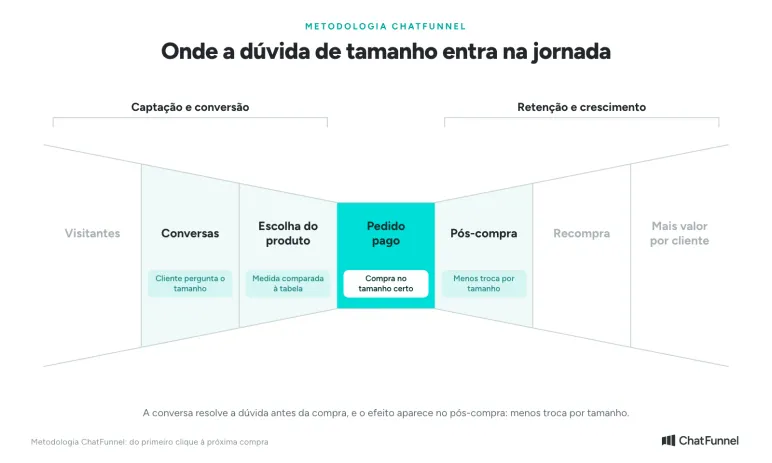
In the ChatFunnel Methodology, sizing questions arise at two Acquisition and conversion stages: Conversations, when the customer asks what size to buy, and Product selection, when AI compares the supplied measurement with the garment chart. The effect appears after Paid order, in Post-purchase: a well-chosen size means one fewer exchange.
Why "I always buy medium" does not settle the choice
The usual size is a starting point. It does not replace that garment's chart. UNIQLO explains in its measurement guide that product dimensions vary with design, intended fit, and fabric. Garments with the same size label can therefore have different measurements.
For the store, the consequence is simple: AI should confirm which product is being discussed. If the customer sent two links, the conversation must establish which one the question concerns. If a variant has its own chart, the agent should use it.
The answer also needs to follow the customer's intent. Someone seeking a looser shirt may reject a garment with the same measurements as another that fits tightly. Asking about preference avoids turning a numerical comparison into a promise of comfort.
Body and garment measurements require different comparisons
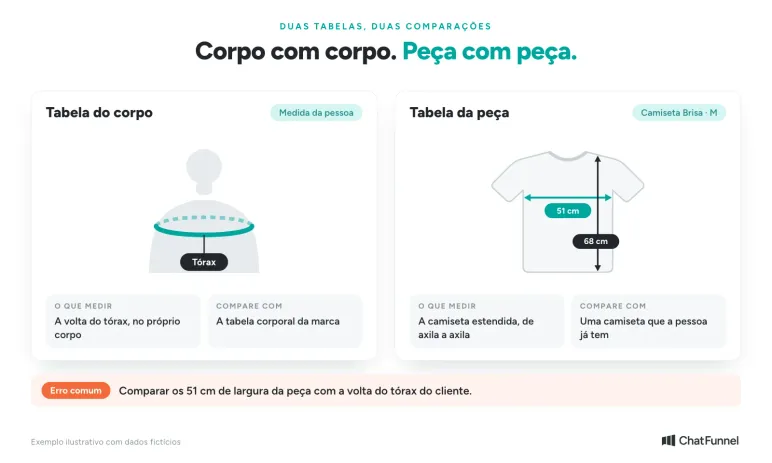
A body chart says which customer measurements correspond to each size under the brand's criteria. A garment chart describes the finished product. In the same guide, UNIQLO advises comparing a body chart with the body and a product chart with a similar garment the person already owns.
If a chart asks for chest circumference, the width of a shirt laid flat is not the requested measurement. If it gives garment width from armpit to armpit, body measurement cannot be substituted either. The conversation should clarify what was measured before suggesting an option.
Units deserve the same attention. "It was 51" is incomplete: 51 centimeters of which measurement, taken how? The agent can ask the customer to confirm the unit and follow the store's measurement instructions. Avoid teaching a method different from the one used in the chart.
Nor should size be inferred from height and weight alone when the brand supplies no validated method for doing so. Those figures do not by themselves fill fields in a bust, waist, or hip chart.
Prepare the product sheet supporting the answer
Before entering content for AI, check that each chart identifies:
- The product and variants to which it applies.
- Whether numbers represent the body or finished garment and the unit used.
- How to measure each field, preferably with a store-approved illustration.
- The brand's description of fit and any differences between versions.
- Who checks the information when there is a question or product change.
That last point prevents an old chart from continuing to guide customers after a fit change. If the supplier sends a new sheet, someone at the store must review it and replace the earlier guidance before enabling it for use.
In ChatFunnel, reviewing versions and active content helps keep this material under team control. Define which document applies to the agent. Two conflicting charts for the same product leave the conversation without a reliable answer, even if both appear official.
An example conversation about a T-shirt
Consider a fictional store selling the Brisa T-shirt. Its sheet gives garment measurements laid flat in centimeters. Width runs from armpit to armpit; length follows the starting point shown in the store's illustration.
| Size | Garment width | Length |
|---|---|---|
| P | 48 cm | 66 cm |
| M | 51 cm | 68 cm |
| G | 54 cm | 70 cm |
These numbers are only an instructional example. They do not describe a product for sale or a standard T-shirt chart.
The customer says they wear M and want a fit similar to a T-shirt they own. The agent explains that the chart gives garment measurements and asks them to compare with that shirt using the same method. The customer reports 51 cm wide and 68 cm long.
An appropriate answer would be: "In the Brisa chart, M is 51 cm wide and 68 cm long. Those match the measurements you gave for your T-shirt. This comparison covers width and length; fit also depends on each garment's design and fabric."
The answer shows where the recommendation came from and its limits. It does not promise that the T-shirt will fit identically or ignore possible differences in shoulders and sleeves.
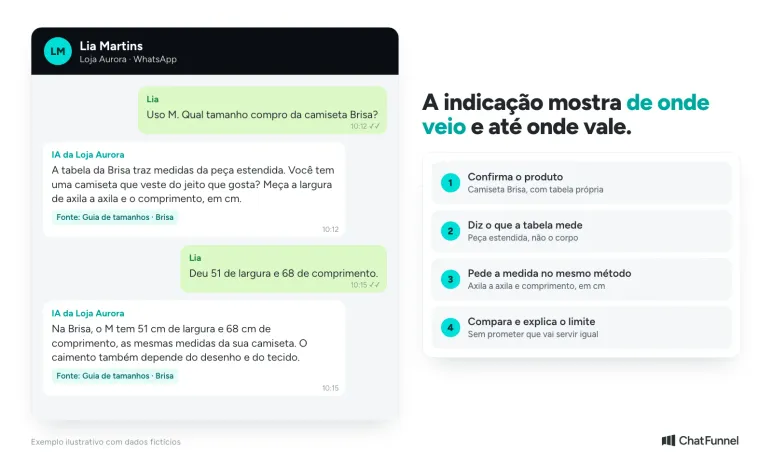
If the customer corrects the information and says they measured their own chest, the earlier comparison no longer applies. The agent should clarify the method and request the garment measurement. If the person has no garment to compare, it can offer team assistance rather than fill the gap with an estimate.
When fit preference changes the decision
Two people with the same measurements may prefer different amounts of room. AI can ask whether the customer wants a fitted or looser look and use the brand's guidance for that product.
The Nike unisex size guide, for example, relates a choice between two sizes to desired fit: smaller for a closer fit, larger for a looser fit. That instruction belongs to that guide. It should not become an automatic rule for every brand or category.
In your store, if the product sheet does not explain what to do between sizes, the agent should state the uncertainty and seek support. "Always take the larger one" can fail with different cuts or customers seeking another feel.
The fabric description also needs to be respected. Without information from the brand, do not assign a number of centimeters of stretch to the garment. Knowing it contains elastane does not by itself say how much it can stretch.
When to hand the conversation to the team
Forward the question when the product chart is missing, sources conflict, or the customer cannot obtain the required measurement. The same applies to a question requiring observation of undocumented garment details, such as the fit of a particular sleeve.
The transfer should carry context. Record the product, chart consulted, measurements supplied, and point still unanswered. A note such as "customer compared a T-shirt 51 cm wide but wants to know whether the Brisa sleeve will fit tightly" is more useful than "sizing question."
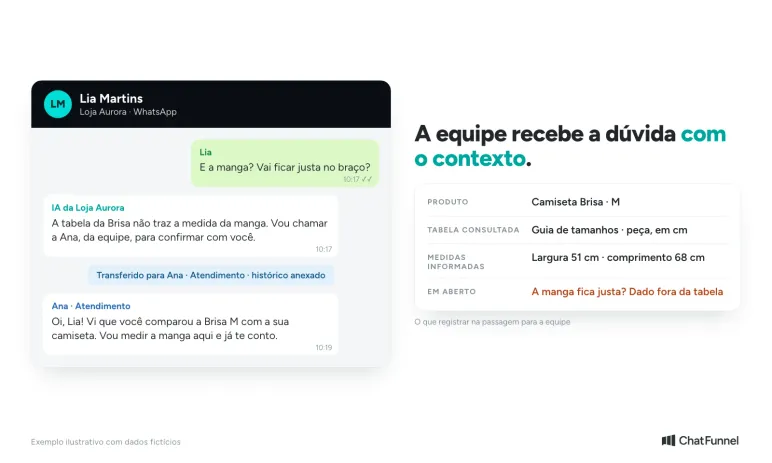
ChatFunnel allows the team to transfer the conversation to human customer service and keep messages associated with the contact. The team needs to agree how to identify these questions and who can answer them. Access to history helps resume without asking for everything again.
Check answers before expanding use
Start with a set of products whose charts are complete. Ask the agent for a recommendation using only "I wear M" and check whether it seeks the missing information. Then give a body measurement for a product whose chart describes the garment: the answer should recognize the difference without comparing the numbers directly.
Also test a question with no unit and a product without a registered chart. Observe whether the agent clarifies the question and calls the team when needed. If it invents a measurement or guarantees the garment will fit, revise the guidance and repeat that conversation before expanding use.
Incoming questions help decide what to document next. If many people ask about sleeve length, check the figure with the brand and add it to the sheet. The goal is to give the customer a comparison they can understand and the team a clear criterion for continuing service.
With checked charts and a path for the team to handle exceptions, ChatFunnel's knowledge base can support the sizing conversation.