

How many business opportunities have been lost simply because a lead did not receive a timely response on WhatsApp?
The scene may be familiar: a message arrives but gets lost among dozens of conversations. The salesperson sees it hours later, replies… and discovers that the customer has already bought from a competitor.
This is the norm in many Brazilian businesses. WhatsApp, which should be a powerful conversion channel, often becomes a chaotic maze where leads warm up, cool off and disappear. Worse still, this happens even at companies with great salespeople and a strong offer.
The problem is a lack of processes and technology to keep up with the speed the market demands.
In 2025, this situation is changing rapidly thanks to a development that is redefining how businesses sell: the evolution of bots.
From passive support to active selling: what changed
For a long time, chatbots were seen as limited assistants. They performed a basic role: answering frequently asked questions, providing a menu of options and, occasionally, routing the conversation to a human agent.
This "gatekeeper" model had two major problems. First, it did not solve the real bottleneck: turning the customer's initial interest into a concrete action, such as a meeting or a purchase.
Second, it kept the process dependent on a human salesperson's speed and availability.
In practice, the bot held the conversation until a salesperson took over, but response time remained a risk. That worked when customers expected to wait hours for service, but consumer behavior has changed. Today, seconds make a difference.
The evolution of bots changed the picture. Instead of simply receiving and routing messages, they now take an active role: guiding leads through the beginning of the buying journey in a personalized way, with a focus on conversion.
What drove this evolution
The transformation did not happen by chance. Three main factors created the conditions for bots to become active sales agents:
-
Advances in artificial intelligence : Language models have become much more natural and better able to understand nuances in conversation, adapting responses to each customer's profile.
Integration with sales systems : Bots stopped operating as "islands" and began connecting to CRMs, calendars, marketing tools and databases, allowing them to act on real, up-to-date information.
Changing consumer behavior : Today's customers do not want to wait. They want answers, an understanding of the offer and, if it makes sense, a way to book or buy immediately.
When these three factors came together, a new type of bot emerged: one that can converse, qualify leads, schedule meetings, send proposals and create business opportunities, all automatically.
How an active sales bot works in practice
To understand the difference, imagine two competing businesses in the same industry. The first uses a traditional bot. The second uses a modern bot with active selling technology, such as ChatFunnel's.
In the traditional scenario, a customer sends a message at night asking for information. They receive a message saying "Hello, our business hours are Monday through Friday, 8 a.m. to 6 p.m." and hear nothing more until the following day. In the meantime, they have already spoken to other companies and may even have made a decision.
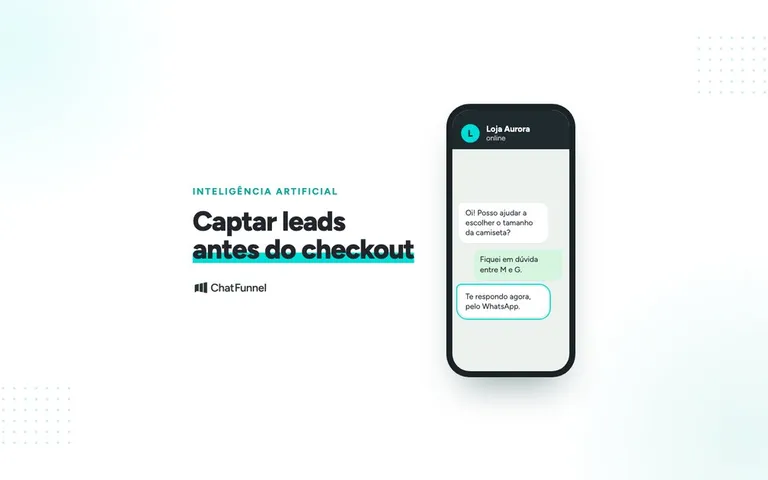
With active selling, the conversation is different. The bot responds immediately, understands the customer's interest, asks strategic questions to qualify them, identifies whether there is genuine potential and, if so, offers meeting times. All of this happens without human intervention up to that point.
The result is simple: the company using active selling reaches the customer first, makes a better impression and significantly increases its chances of closing the sale.
## ChatFunnel's role in this transformation
ChatFunnel was created to solve the chaos of using WhatsApp for business. Our platform transforms this currently reactive and overloaded channel into an automated, predictable sales funnel.
Here is how it works:
-
Immediate 24/7 support : Every lead receives a response as soon as they arrive, including outside business hours.
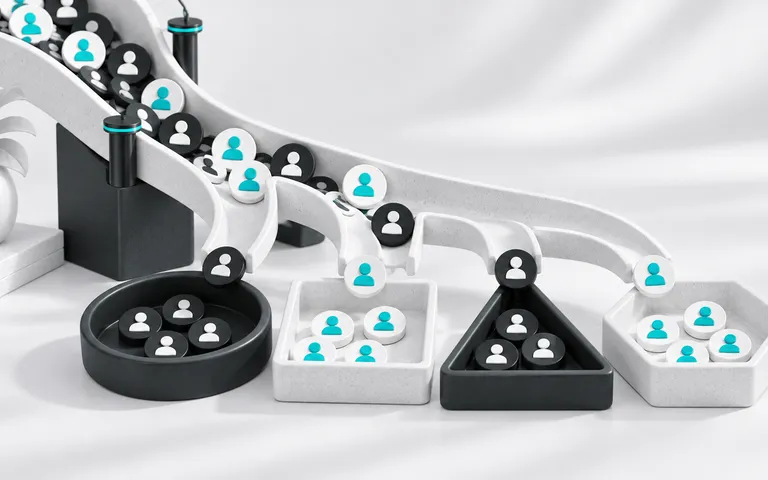
Intelligent lead filtering : The bot asks key questions to quickly determine whether the contact is a potential buyer or simply curious.
Automatic scheduling : If the lead is qualified, the system schedules the meeting on the salesperson's calendar without endless back-and-forth messages.
A team focused on closing : With fewer distractions and repetitive tasks, salespeople can spend their time negotiating and closing contracts.
Strategic benefits for managers and business owners
The impact of this approach goes beyond speed. An active process gives managers full visibility into the sales funnel. They can see how many leads come in, how many are qualified, the rate at which they move between stages and where bottlenecks occur.
This predictability allows managers to make faster, more informed decisions, adjust campaigns and provide targeted team training.
The effect on team morale is real too: employees experience less stress, rework decreases and each salesperson works with warmer leads who are more likely to buy.
The future of bots and the risk of falling behind
If using a WhatsApp bot was considered innovative in 2020, in 2025 it is practically a requirement for businesses that want to compete. The evolution of bots is a reality today.
Companies that adapt quickly will gain market share, even with smaller teams. Those that continue to treat their bot as a simple virtual support agent will lose ground to faster, more strategic competitors.
See how it works in practice
ChatFunnel helps businesses in a range of industries turn conversations into customers without depending on business hours or a salesperson's availability. Want to see how it could work for your business?
Book a free demo now and discover how to put your WhatsApp on autopilot, turning leads into real opportunities 24 hours a day, seven days a week.