

An omnichannel platform or omnichannel support is the system that brings a company's channel conversations into one inbox, with customer history and an assigned responder. For an online store, this means handling WhatsApp and Instagram together without losing the conversation when someone changes channels.
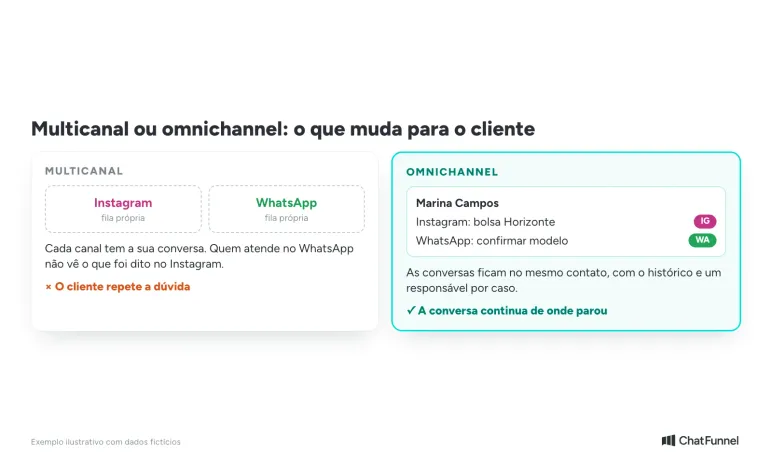
The difference from multichannel support is continuity. In multichannel, a store responds on several channels but each works separately. In omnichannel, the team sees what was said and who owns the case across channels.
ChatFunnel for online stores brings WhatsApp and Instagram support, contact history and conversation assignment together. This guide explains how the platform works, selection criteria and how to test before subscribing.
What is an omnichannel platform and how does it differ from multichannel?
An omnichannel platform connects support channels so a conversation continues where it stopped. The representative sees customer context, and the customer need not repeat the story at each channel change.
| Aspect | Multichannel | Omnichannel |
|---|---|---|
| Channels | Several, each with its own queue | Several in one inbox |
| History | Separate by channel | Combined by contact |
| Who responds | Each channel has its own team | One case owner across channels |
| For the customer | Repeats the question when changing channels | Continues where they stopped |
In practice, a store customer asks about a product on Instagram, then contacts WhatsApp after purchase. With an omnichannel platform, the representative finds the earlier conversation and continues.
How an omnichannel platform works in ecommerce
There are four parts a store should check:
- Channel entry. WhatsApp messages and Instagram interactions such as direct messages, comments, stories, reels and live streams arrive as conversations on one screen.
- History by contact. Each person has a record with conversations, details and, when the store is integrated, order history.
- Assignment and ownership. A conversation can be assigned, transferred between representatives or sent to a person when AI needs help.
- Permissions. Each role sees only the modules and actions it needs.
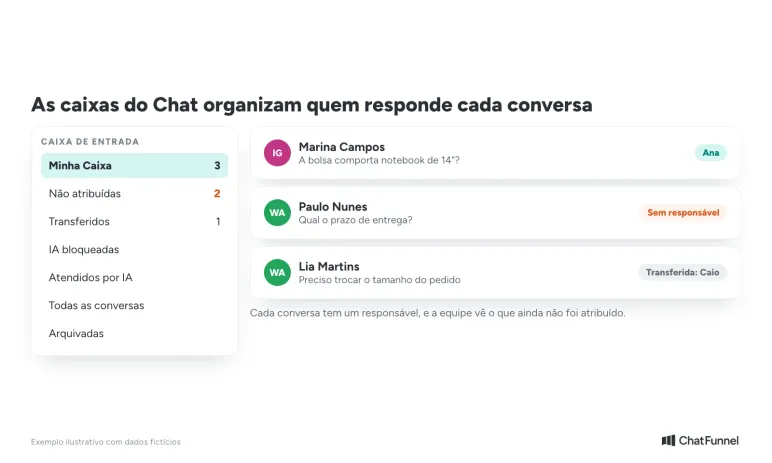
In ChatFunnel, Chat brings connected-channel conversations into a screen divided into conversation list, open conversation history and contact data. The inbox separates My Inbox, Unassigned, Transferred, AI blocked, Handled by AI, All and Archived. The Help Center explains this in how to navigate ChatFunnel Chat and what you can do with the Inbox.
When more than one person works in support, see also how to organize WhatsApp with multiple representatives.
What an omnichannel platform needs: selection criteria
More channels do not mean better support. Use these criteria to compare options:
| Criterion | Why it matters | How to test |
|---|---|---|
| Your store's channels | If a customer asks on Instagram and buys through WhatsApp, both must be on the platform | Connect both test channels and send messages |
| History by contact | Avoids repeating the question | Open a contact and check whether both channels' conversations appear |
| Assignment and owner | Prevents two different replies to the same case | Assign and transfer a conversation between two people |
| AI handoff to team | The person needs to know what was said | Trigger a transfer and read the summary |
| Store integration | An order beside the conversation speeds the response | Check which store data arrives |
| WhatsApp rules | Cost and support window affect store economics | See official WhatsApp API pricing |
If your business uses a WhatsApp CRM, check whether channel conversations enter the same customer record.
How to preserve context when a customer changes channels
The most delicate part of an omnichannel platform is determining whether two contacts are the same person. An Instagram name, photo and "I already spoke with you" help locate a conversation. Alone, they do not prove who made a purchase.
Meta documentation on Instagram profiles distinguishes the channel user identifier, name and username. Confirming the link between that profile and a purchase requires the store's own verification.
While the link is pending, the team can answer general questions such as product measurements or payment methods. Information about a specific purchase, such as address, items and order progress, waits until verification.
If the store has an authenticated area and approved contact-verification procedure, use it. Signing into an account alone does not prove that a WhatsApp number belongs to the same person. That depends on store and integration capabilities, not a presumed ChatFunnel button.
A short customer instruction could be: "To check this purchase here, I need to confirm its link to the order account. I will explain our store's confirmation process. Do not send your password or access codes in this conversation."
If details do not match, keep records separate and route verification to a team member. Do not fill gaps based on similar names.
Continuity record: what to save when changing channels
After verification, prepare a summary that lets the next representative act. Copying the entire conversation into a note often hides the information they need. The record below is a process model adaptable to the chosen system's fields and notes.
| Field | What to record |
|---|---|
| Source | Channel and conversation where the issue began |
| Link | Whether association was confirmed, by which procedure and by whom |
| Subject | Question or request still open |
| Last reply | What the store already told the customer |
| Pending item | What must be checked before the next reply |
| Owner | Person or team taking the next step |
| Destination | Channel agreed for continuation |
Keep only what is necessary in the record. Full history can remain at its source with access based on team permissions. There is no reason to repeat an address or payment data in a size-question note.
Also separate associating a case from deciding to merge records. In Shopify's customer profile documentation, merging includes a review of information to retain. When there is a conflict, the guidance is to cancel and adjust records before proceeding.
In ChatFunnel, the contact record combines associated history and data, and duplicate records can be merged. That does not prove any two accounts on different channels are duplicates: the team decides based on a verified link.
Who responds when both channels are open?
A customer may ask "Have you checked?" on Instagram while waiting for a WhatsApp reply. If each queue treats this as a new case, two people may provide different instructions.
After confirming the same contact and subject, keep one owner for the next step. The second conversation receives a continuity note without closing the main request. If the customer prefers Instagram, record the choice and notify the WhatsApp case owner.
A possible reply: "Ana is handling your request. We will continue on WhatsApp as agreed. If you prefer a reply here, let me know so we can change channels."
This also matters when AI transfers support to a person. The summary should state the pending question and what has been said. If the link is not yet verified, that must appear. The person taking over should not treat an AI assumption as completed verification. See how a WhatsApp AI agent works and when it transfers a conversation to the team.
Omnichannel support example: two profiles named Marina
Consider a fictional bag store. Marina Campos asks on Instagram whether a model fits a 14-inch laptop. The team explains its internal dimensions. After buying, she contacts WhatsApp to confirm whether she chose the model discussed earlier.
The same morning, another person also named Marina asks about a purchase. The team finds both contacts. The shared name does not determine which history to open.
In this example, the store has an authenticated area and its own procedure for confirming the contact linked to a purchase. Marina Campos completes it. The team verifies the association and records the result before consulting the order. The record is:
| Field | Fictional example entry |
|---|---|
| Source | Instagram, conversation about the Horizonte bag |
| Link | Confirmed by Ana using the store procedure at 10:20 a.m. |
| Subject | Check whether purchased model matches the one discussed |
| Last reply | Internal measurements provided on Instagram |
| Pending item | Compare the ordered item with the model discussed |
| Owner | Ana, support team |
| Destination | WhatsApp, as chosen by the customer |
Ana answers the next question without asking Marina to repeat measurements. She still checks the purchased item before confirming a match. The summary locates the question; it does not replace the order check.
The other Marina does not complete verification. The team keeps the contact separate and replies: "We have not yet confirmed the link to this purchase. I can explain account access or product features. To provide order details, we need to complete confirmation."
This reply preserves the ability to help while preventing a rushed merge from exposing a purchase to the wrong person. The situation is illustrative and does not describe a ChatFunnel customer or result.
How to test an omnichannel platform before subscribing
Use test contacts and purchases. One person simulates the customer and another takes over without seeing the start. They should find the pending issue and know what can be answered from available records.
Check these cases:
- Same customer, new channel: after verifying the link, the representative finds the earlier question and continues without asking for the story again.
- Same name, different person: records remain separate and no purchase details are disclosed.
- Incomplete verification: the record shows what is pending, and the response is limited to general guidance.
- Return through the first channel: the team identifies the active case and avoids competing replies.
- Representative change: the new person finds who took over, what was answered and what action remains.
If a test fails, adjust the missing field or handoff. Adding more channels before fixing it spreads the same question across other queues.
When reviewing support, count channel changes with unnecessary story repetition and those receiving duplicate replies. Compare periods with the same criterion. Separately record necessary identity verification and a repeated question already in history.
Choose conversation continuity over channel count
A good omnichannel platform provides customer history in view, a clear case owner and a safe AI-to-team handoff. Before subscribing, test the full path: Instagram entry, WhatsApp continuation, link verification and transfer to a person.
With that flow defined, AI for ecommerce can enter stages compatible with available data and store permissions. To see features up close, explore how ChatFunnel brings WhatsApp and Instagram together for store support and request a demonstration.
Frequently asked questions about omnichannel platforms
What is an omnichannel platform?
It is a system combining conversations from several channels in one inbox with customer history and a case owner. Online stores commonly connect WhatsApp and Instagram so the team can continue where the conversation stopped.
What is the difference between omnichannel and multichannel?
In multichannel, the store supports several channels but each works separately. In omnichannel, channels share history and the team sees customer context in any of them.
What is omnichannel support?
It is support where a customer changes channels without repeating a question. The team sees the earlier conversation, knows who owns the case and continues where it stopped.
Does an omnichannel platform suit ecommerce?
Yes, when store channels match those where customers ask and buy, such as WhatsApp and Instagram. The benefit appears in pre-purchase questions, order tracking and post-sale support.
Which channels should an omnichannel platform have for a store?
The channels customers already use to contact the store. ChatFunnel combines WhatsApp and Instagram support, including direct messages, comments, stories, reels and live streams, and the website WhatsApp bubble brings visitors to a conversation. Connect only channels the team can support.
Does AI replace the team on an omnichannel platform?
No. AI answers questions with available data and passes the conversation to a person when it needs help. The team remains responsible for cases requiring checks, such as verifying contact links.
How does ChatFunnel work as an omnichannel platform?
ChatFunnel combines WhatsApp and Instagram conversations in one Chat screen, with inboxes such as My Inbox, Unassigned and Transferred. Each conversation can be assigned to a representative, and history remains on the contact record. The Help Center shows the steps.
Turning Visitors into Loyal Customers 🩵